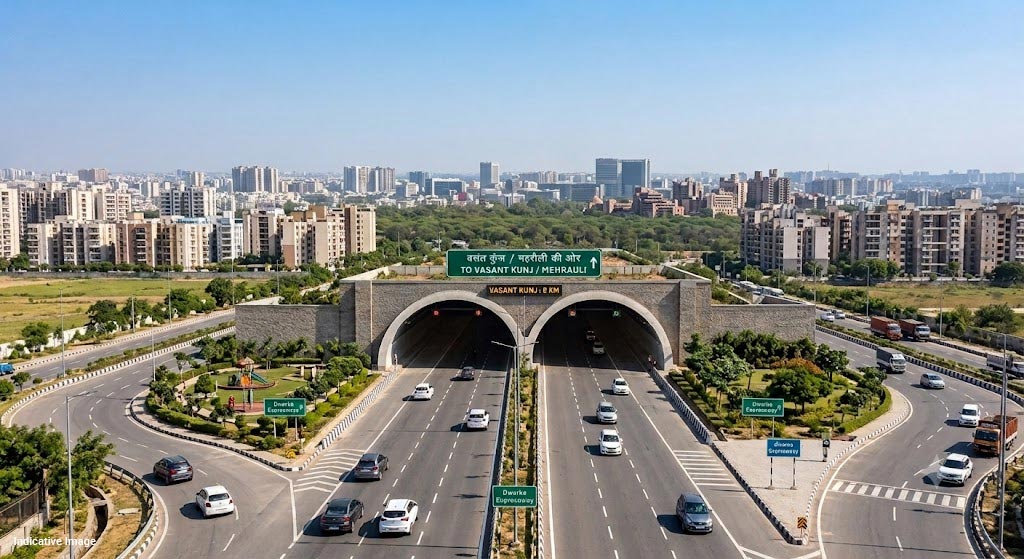
When the Union Cabinet approves a new highway, most headlines focus on the project’s cost, length, or completion timeline.
Smart investors look at the same announcement and ask a different question: Who stands to benefit long before the road is built?
Infrastructure announcements are rarely just about improving connectivity. They often reveal where governments expect cities to grow, businesses to expand, and economic activity to concentrate over the next decade. In many ways, they are among the earliest indicators of future commercial activity – long before the first vehicle uses a new highway, or the first metro train arrives at a station.
The Cabinet’s recent approval of ₹14,115 crore worth of highway projects, including a ₹6,970 crore underground tunnel connecting the Dwarka Expressway with Vasant Kunj, is a perfect example. While commuters see a faster route, businesses see something far bigger – a new pattern of movement.
Have you ever noticed how a hotel, fuel station, restaurant, or retail complex often appears long before an area becomes a popular destination? That’s rarely a coincidence.
Large businesses don’t wait for thousands of customers to arrive before making a decision. They study infrastructure plans to understand where those customers are likely to come from in the future.
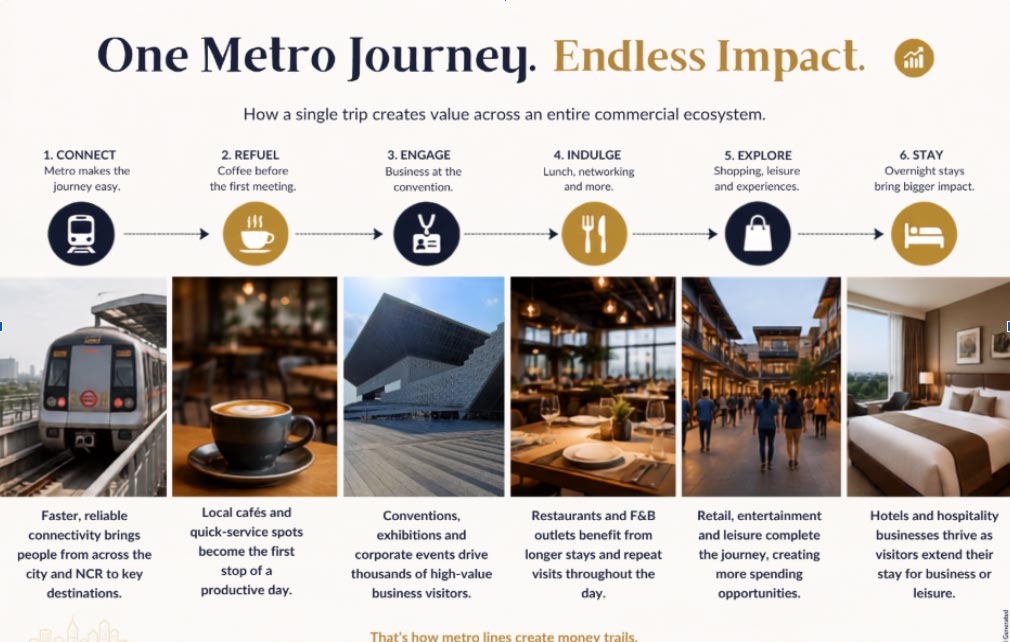
When travel becomes easier, behaviour changes. People begin visiting places they once considered too far. Businesses notice an increase in movement. New brands open stores, restaurants follow, hotels see opportunity, and commercial activity gradually builds around the new corridor. What started as an infrastructure project slowly evolves into a thriving business ecosystem.
The sequence often looks like this:
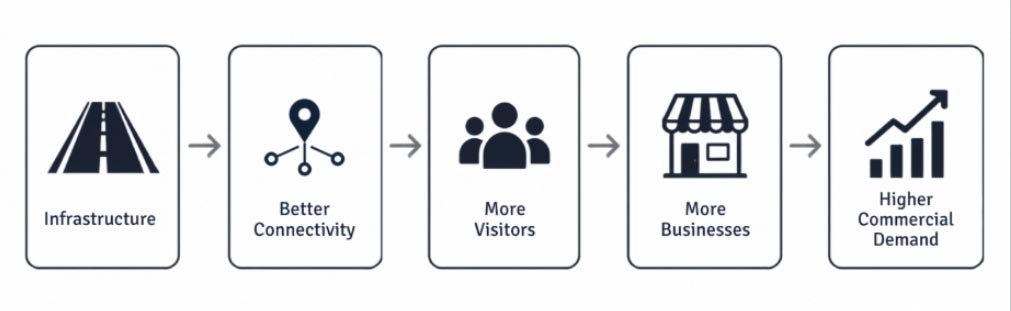
This pattern has repeated itself across growing cities, which is why infrastructure announcements often attract as much attention from investors as they do from engineers.
How to Read Infrastructure News Like an Investor
When the government announces a major infrastructure project, the headline usually talks about kilometres, budgets, and construction timelines.
Those numbers matter – but they don’t tell the whole story. Instead, ask questions like:
- Who becomes easier to reach because of this project?
- Does it improve access to an airport?
- Does it connect residential neighbourhoods with business districts?
- Does it bring convention visitors closer to retail and hospitality destinations?
- Does it shorten travel between two high-density commercial zones?
The answers often reveal where future business activities are likely to grow.
The newly approved underground tunnel connecting the Dwarka Expressway to Vasant Kunj is more than an engineering project.
It strengthens the connection between some of Delhi-NCR’s most important residential, commercial, and business districts while improving access to the airport and surrounding growth corridors.
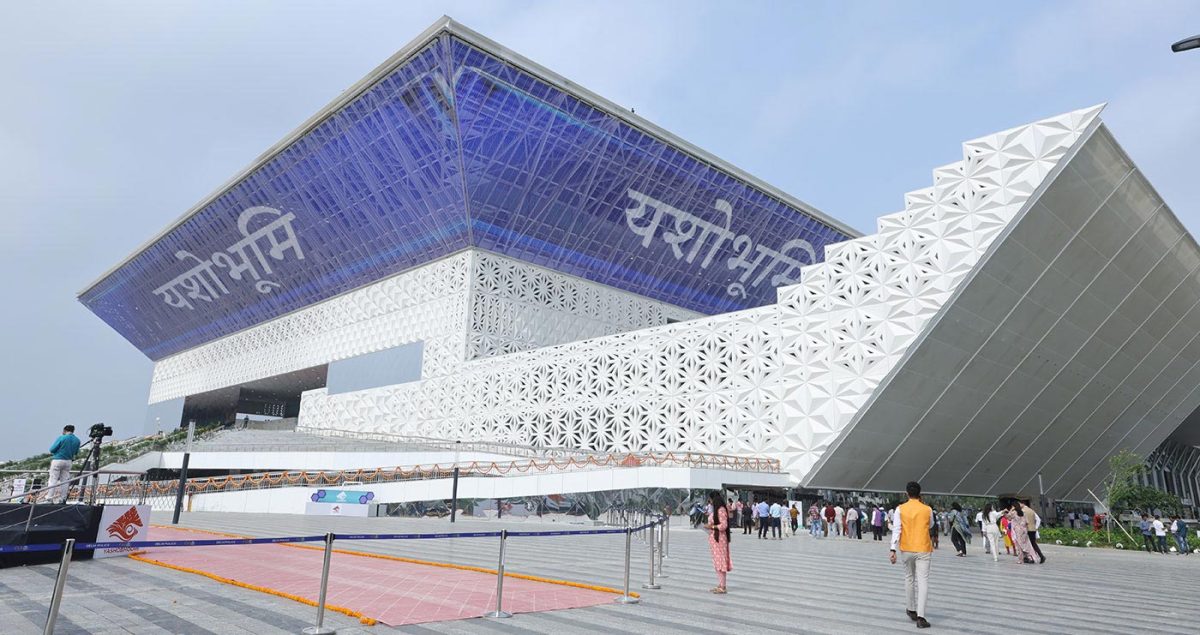
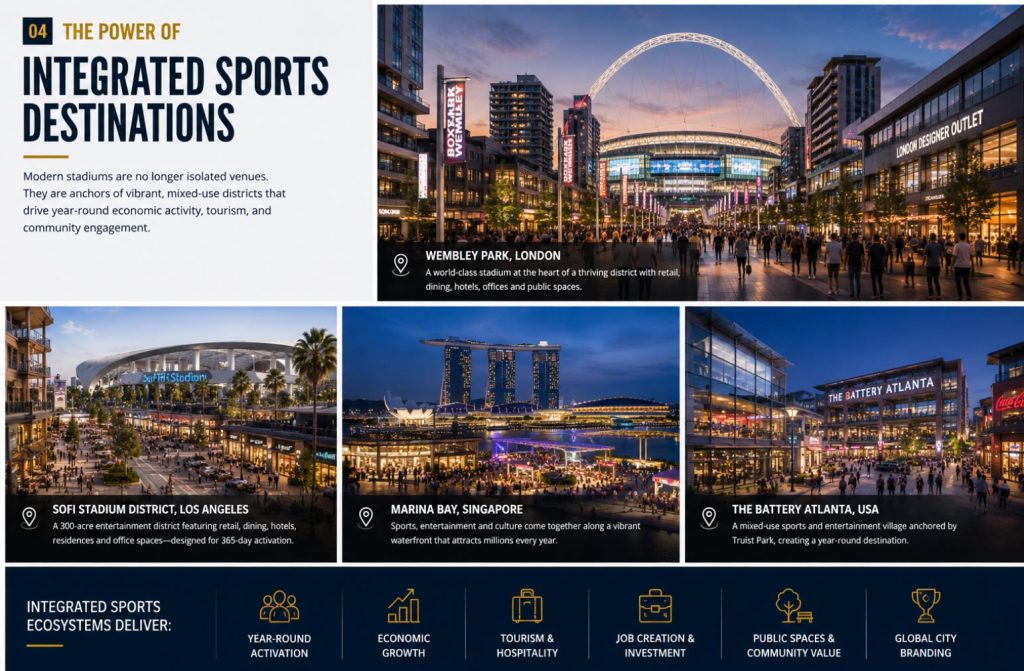
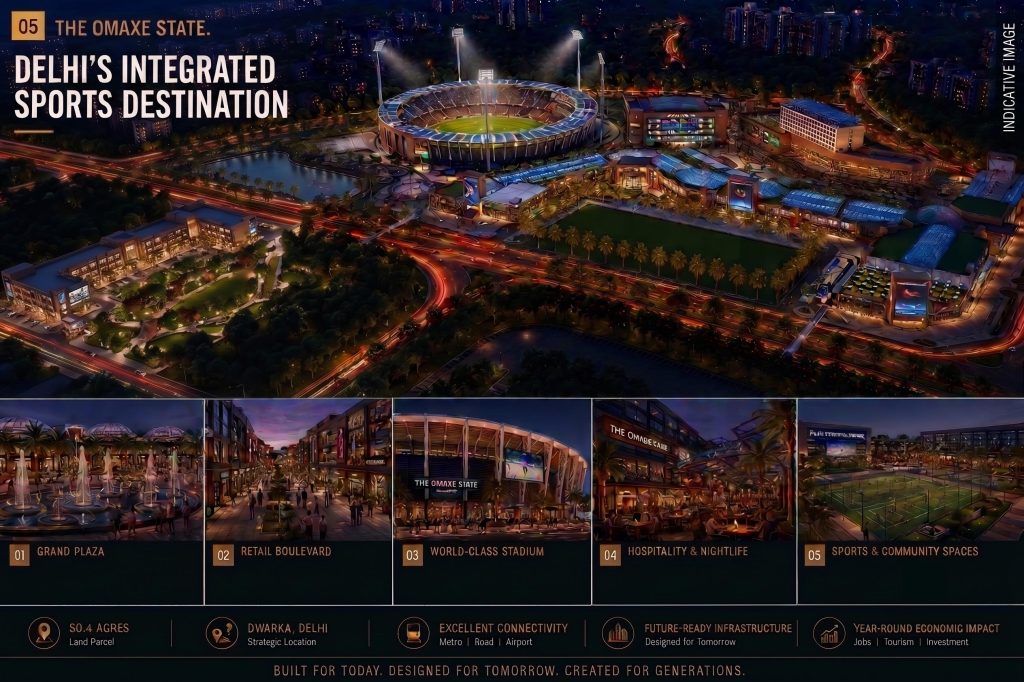
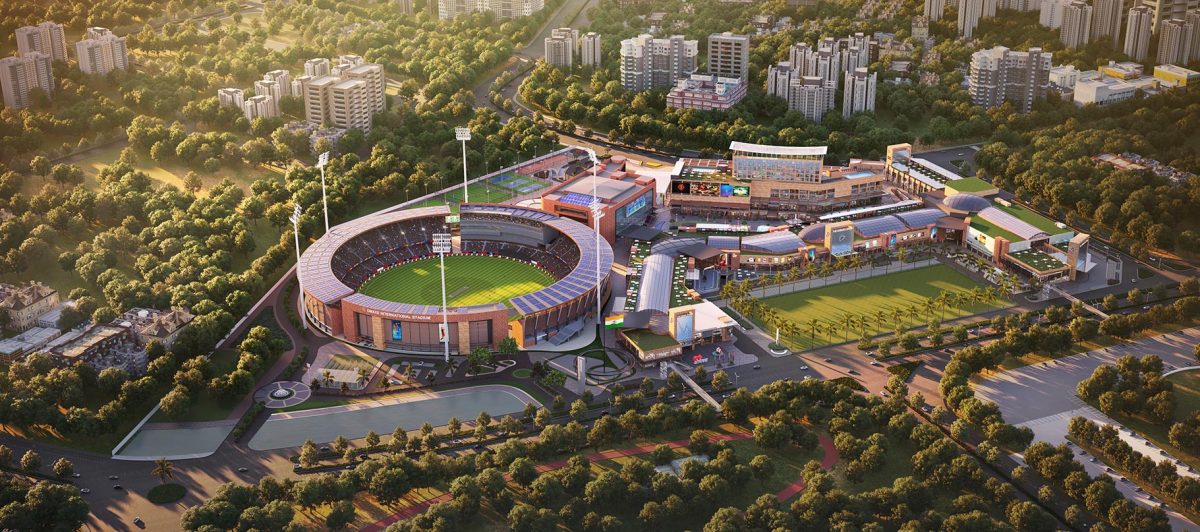
More importantly, it complements a much larger infrastructure network already taking shape across the region, including the Dwarka Expressway, Urban Extension Road-II (UER-II), Yashobhoomi (India International Convention and Expo Centre), and the upcoming Bharat Vandana Park. This is also why integrated commercial destinations located within such infrastructure-led ecosystems often attract long-term interest. Developments like The Omaxe State in Dwarka Sector 19B illustrate this approach by bringing together sports, retail, dining, hospitality, and social experiences within a location supported by expanding regional connectivity and multiple demand drivers.
Each of these projects serves a different purpose. Together, they create an ecosystem that is easier to reach, more attractive for businesses, and capable of supporting higher visitor movement over the long term.
Most people notice infrastructure when the ribbon is cut. Businesses notice it when the Cabinet approves it. So, the next time you read about a new highway, airport, metro line, or tunnel, don’t stop at the headline. Look beyond the construction.
Because by the time the ribbon is cut, the smartest investors are already looking for the next announcement.