Categories
Uncategorized

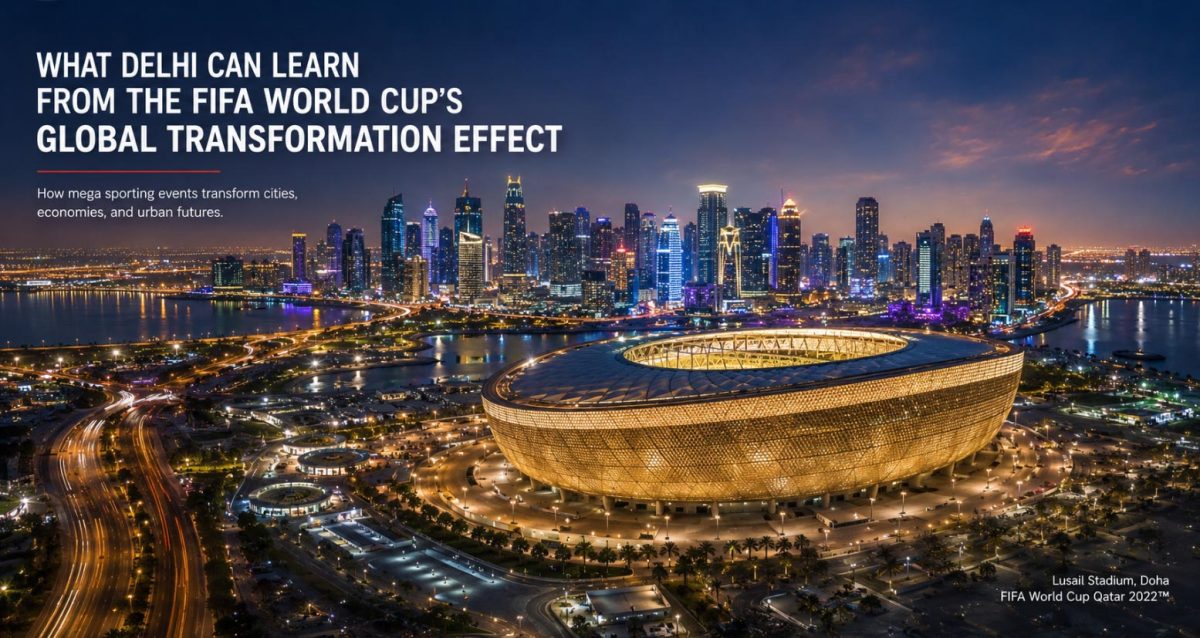
What Delhi Can Learn from the FIFA World Cup’s Global Transformation Effect

The FIFA World Cup has evolved far beyond football.

Today, it functions as a global catalyst for infrastructure, tourism, economic activity, and urban modernisation. Host nations no longer prepare only stadiums. They prepare entire cities.

From transportation networks and hospitality districts to public spaces and entertainment ecosystems, the modern World Cup has become a powerful instrument for accelerating urban transformation.

As preparations intensify for the 2026 FIFA World Cup across the United States, Canada, and Mexico, cities are already witnessing large-scale upgrades in mobility systems, fan infrastructure, stadium modernisation, hospitality, and tourism ecosystems.

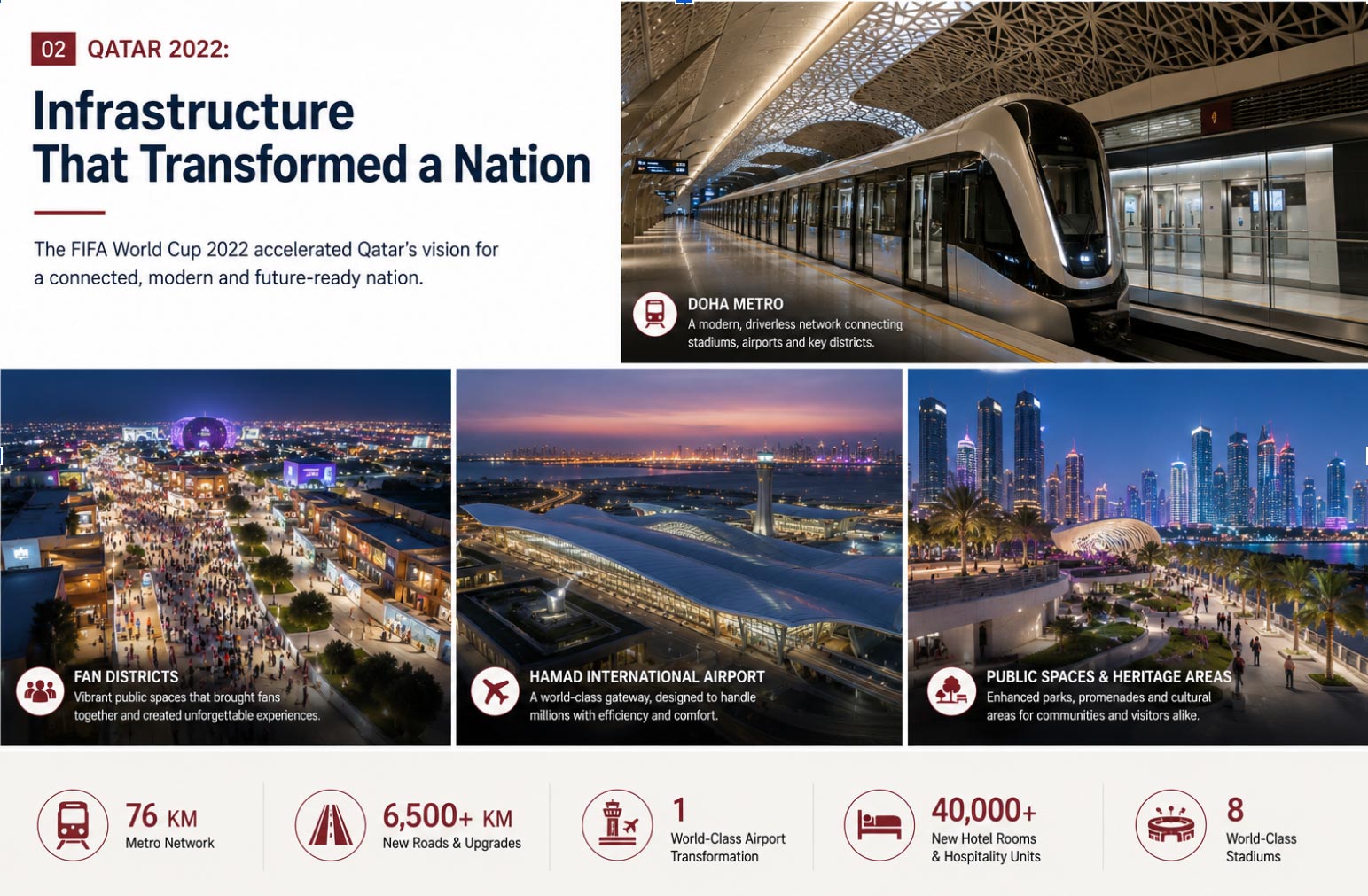
The same transformation was visible in Qatar during the 2022 FIFA World Cup, where the tournament became a catalyst for one of the most ambitious urban infrastructure programs in recent history.

Qatar 2022: Building More Than Stadiums

For Qatar, the FIFA World Cup was not just about hosting football matches.

It became an opportunity to accelerate national infrastructure, strengthen tourism, and position the country as a globally connected destination.

Ahead of the tournament, Qatar invested heavily in:

  • metro rail systems
  • highways and roads
  • airports
  • hospitality infrastructure
  • public spaces
  • entertainment districts
  • world-class stadiums

One of the most visible legacies of the World Cup was the Doha Metro, which rapidly transformed urban mobility and connectivity across the city. The tournament accelerated projects that may otherwise have taken years or decades to complete.

Importantly, Qatar did not approach the World Cup as a standalone sporting event.

It approached it as a city-building opportunity.

The focus extended beyond stadiums toward creating integrated ecosystems capable of supporting tourism, live entertainment, business events, and economic activity long after the tournament concluded.

That shift reflects how modern cities are increasingly viewing global sporting events,
not simply as spectacles, but as instruments of long-term urban positioning.

A Pattern Repeated Across Global Cities

Qatar is not an isolated example.

Historically, some of the world’s most transformative urban development stories have emerged around major sporting events.

Barcelona’s 1992 Olympics helped reinvent the city’s global identity through waterfront redevelopment, public infrastructure upgrades, and tourism expansion. The event accelerated urban projects already envisioned for the city while helping position Barcelona as one of Europe’s leading tourism and cultural destinations.

Similarly, London’s 2012 Olympics became a catalyst for the regeneration of East London. Areas like Stratford witnessed major improvements in transport infrastructure, residential development, commercial growth, and public spaces, eventually evolving into vibrant mixed-use urban districts.

In each case, the sporting event acted as an accelerator.

Cities used the global stage as an opportunity to modernise infrastructure, improve mobility, attract investment, and strengthen international visibility.

Most importantly, these transformations extended beyond sports.

They reshaped how people experienced the city itself.

The 2026 FIFA World Cup and the Evolution of Sports-Led Urban Development

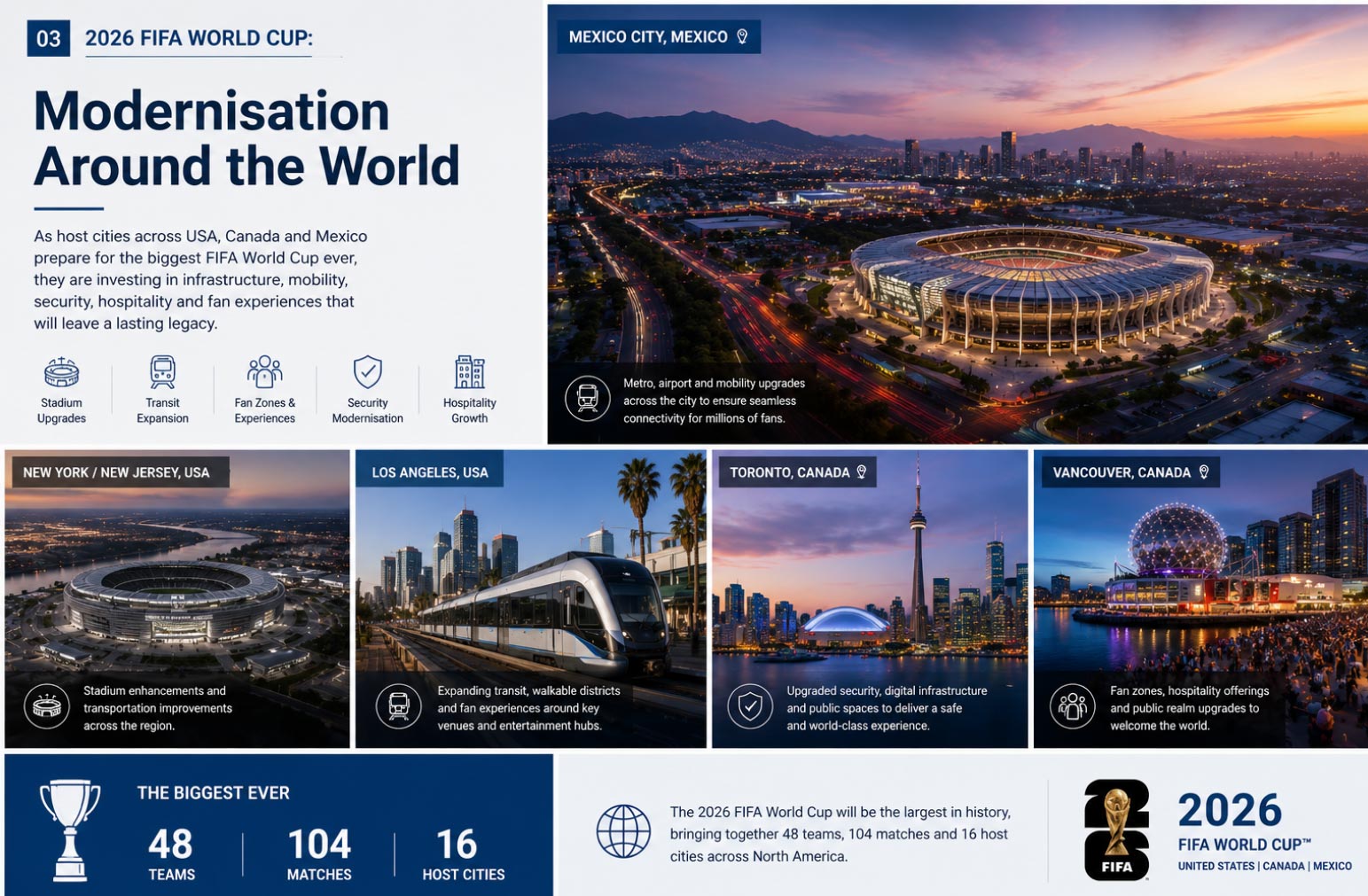
The ongoing preparations for the 2026 FIFA World Cup further demonstrate how major sporting events continue influencing urban development at scale.

Across North America, host cities are investing in:

  • stadium modernization
  • transit expansion
  • security infrastructure
  • fan districts
  • hospitality
  • public mobility systems
  • entertainment zones

Mexico City, for example, is currently undertaking upgrades to metro systems, airport infrastructure, and public mobility corridors ahead of the tournament.

The 2026 edition will also become the largest FIFA World Cup in history, featuring 48 teams and 104 matches across 16 host cities.

Yet the most important evolution lies elsewhere.

Modern cities are no longer building isolated venues designed to remain inactive outside tournament schedules.

Instead, they are developing integrated sports and entertainment ecosystems capable of generating year-round economic activity through:

  • retail
  • hospitality
  • dining
  • concerts
  • live experiences
  • public engagement

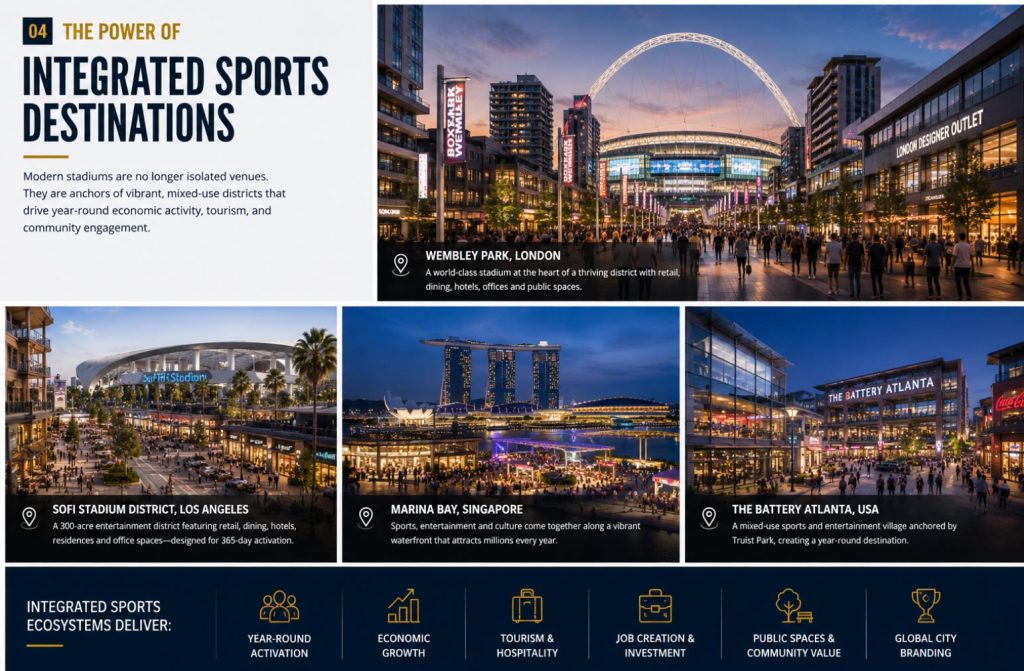
The modern stadium is increasingly becoming the anchor of a much larger urban ecosystem.

Why Integrated Sports Destinations Matter

Globally, the future of sports infrastructure lies in mixed-use destinations.

Leading sports districts around the world increasingly combine:

  • stadiums
  • retail boulevards
  • entertainment zones
  • hospitality experiences
  • convention infrastructure
  • public gathering spaces
  • cultural programming

The objective is simple: to create destinations that remain active beyond match days.

This model improves not only commercial viability, but also contributes toward:

  • tourism growth
  • employment generation
  • real estate development
  • infrastructure expansion
  • enhanced city branding
  • urban regeneration

Cities today compete not only through infrastructure, but also through experiences.

Integrated sports destinations are increasingly becoming part of that competitive identity.

The Opportunity for Delhi

As India expands its ambitions in sports, entertainment, tourism, and global events, the need for integrated sports infrastructure is growing.

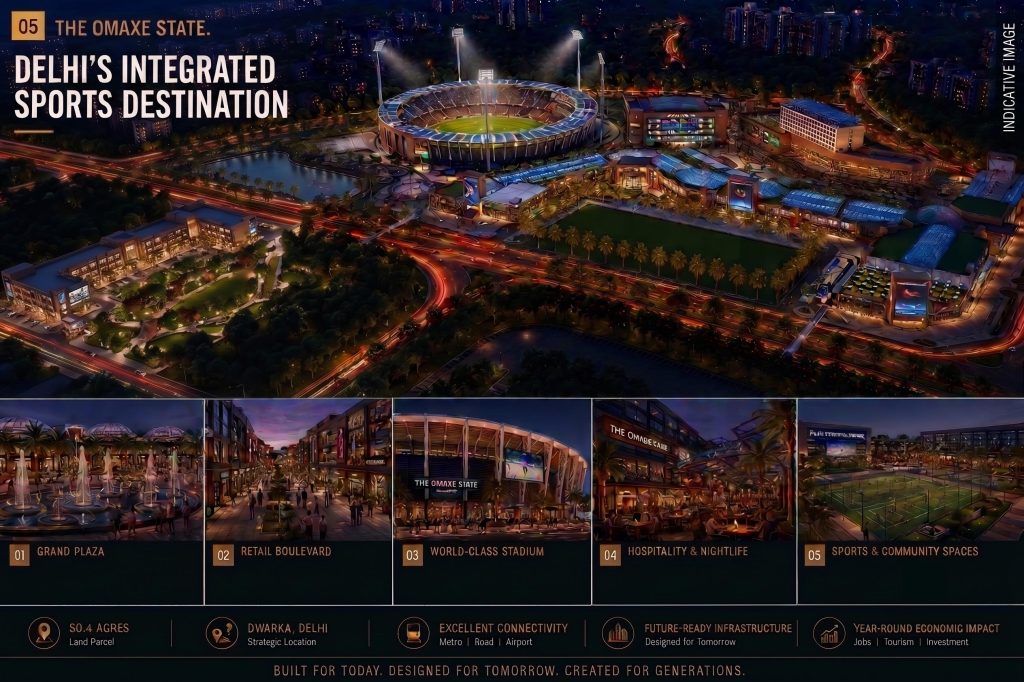
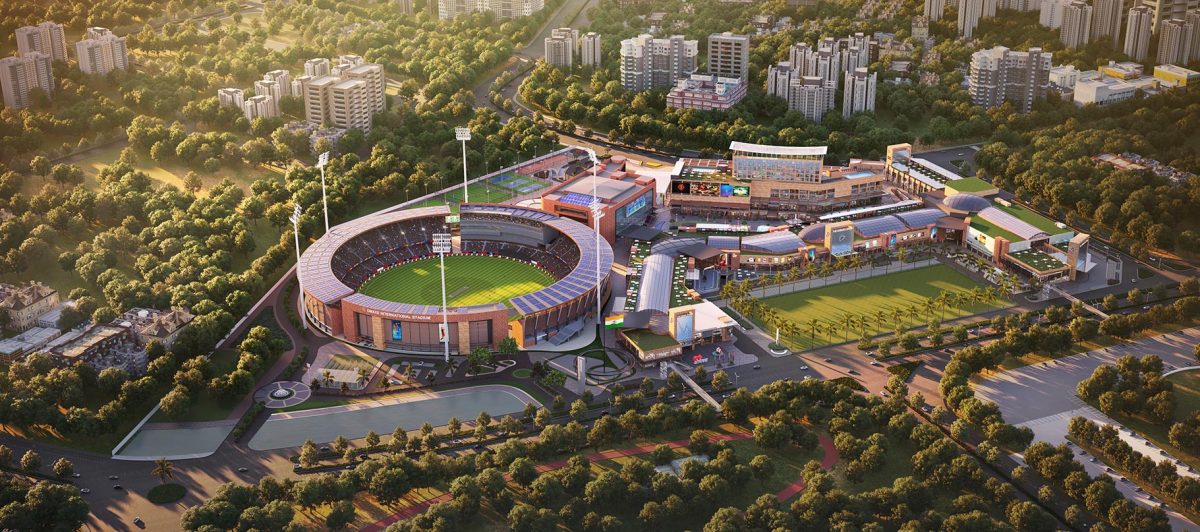
Projects like The Omaxe State in Dwarka reflect this emerging global direction.

Spread across 50.4 acres, the development combines:

  • a world-class cricket and football stadium
  • a multi-sport indoor arena
  • retail districts
  • hospitality
  • dining
  • entertainment experiences
  • social and cultural spaces

Its strategic location near key transport corridors and major urban infrastructure positions it within Delhi’s broader evolution as a modern global city.

More importantly, it reflects a larger shift in how sports infrastructure is being imagined in India.

The future lies not merely in building stadiums, but in creating integrated destinations capable of driving tourism, entertainment, economic activity, and community engagement throughout the year.

Whether or not India hosts a FIFA World Cup in the near future, the larger opportunity already exists: to build the kind of infrastructure ecosystems that globally competitive cities increasingly require.

Because today, sports are no longer only about spectatorship.

They are increasingly becoming engines of urban transformation.

Categories
Uncategorized

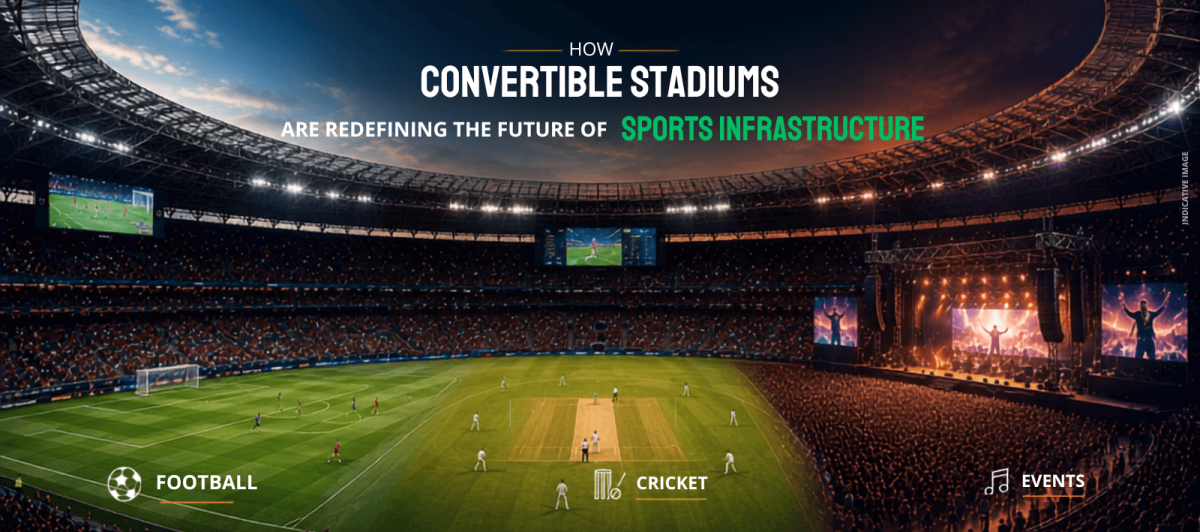
How Convertible Stadiums Are Redefining the Future of Sports Infrastructure

Traditionally, cricket stadiums hosted cricket and football stadiums hosted football. But in an era where infrastructure is expected to deliver value year-round, is a single-purpose stadium enough? 

For decades, each stadium has been built around the needs of one sport. A cricket pitch, for instance, requires a central clay wicket and specific field dimensions, while football demands a uniform grass surface optimized for continuous play. These distinct technical requirements made it difficult for a single venue to accommodate multiple sports without compromising playing conditions. While these facilities played an important role in developing sporting culture, they often remained underutilised between seasons and events. 

Today, that is beginning to change. 

As cities around the world seek to maximise the value of sports infrastructure, a new generation of stadiums is emerging. They are designed not around a single sport, but around adaptability. Advanced retractable and modular pitch technologies now allow venues to seamlessly transition between different sporting formats, entertainment events, and fan experiences. 

The shift is already visible in some of the world’s most iconic stadiums. Madrid’s Santiago Bernabéu features an advanced retractable pitch system that allows natural grass playing surface to be divided into six large, massive steel trays and stored in an underground facility when not in use.

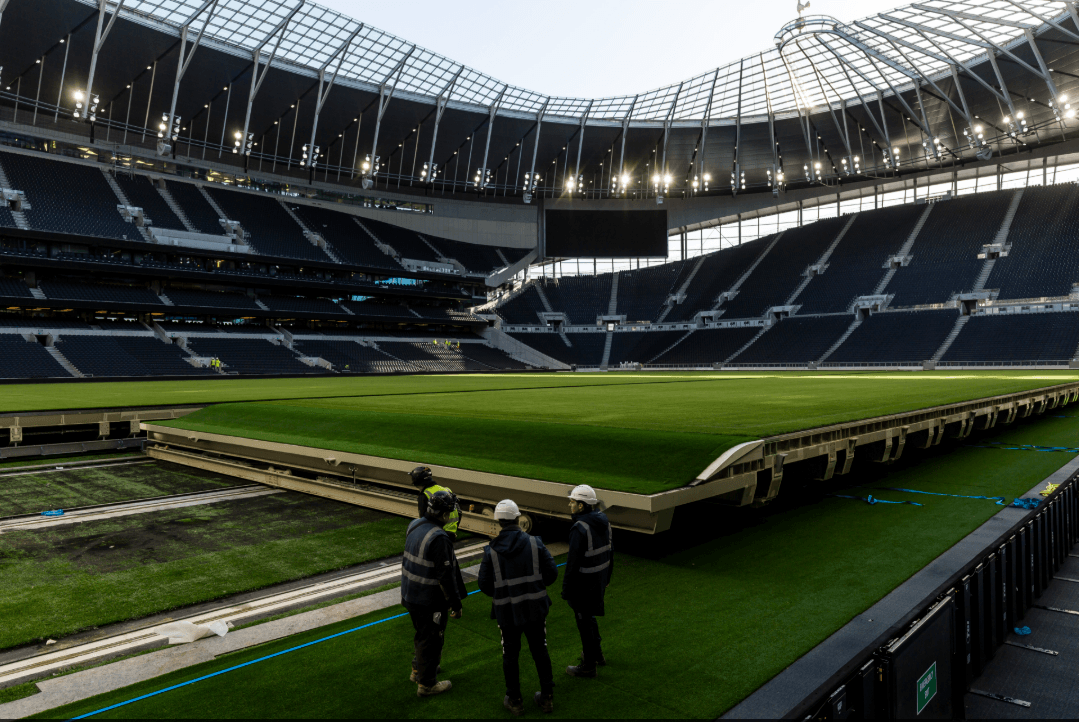
In London, Tottenham Hotspur Stadium can transform from a football venue into an NFL-ready stadium through its innovative split-pitch technology. These innovations enable venues to host a wider range of events while ensuring world-class playing conditions. 

Tottenham Hotspur Stadium’s moving grass plate pitch

What makes these stadiums remarkable is not just the technology, but the philosophy behind them. They are built for flexibility. 

Instead of remaining active only during sporting seasons, modern stadiums are evolving into year-round destinations. By accommodating multiple sports, entertainment events, concerts, and community gatherings, they generate greater economic activity, attract more visitors, and make better use of valuable urban infrastructure. 

In India, however, sports infrastructure has traditionally been built around cricket. But as the country’s sporting ambitions continue to grow, there is increasing demand for infrastructure that can support multiple formats, attract diverse audiences, and remain relevant beyond match days. 

This is where the next chapter of sports infrastructure begins.

The Omaxe State brings India’s first convertible* stadium, introducing a drop-in pitch system where the playing surface can be removed and replaced with another purpose-built surface, designed to seamlessly transition between cricket and football. With a seating capacity of over 30,000 spectators, the venue is envisioned as one of the country’s most innovative sporting destinations, combining flexibility with world-class fan experiences.

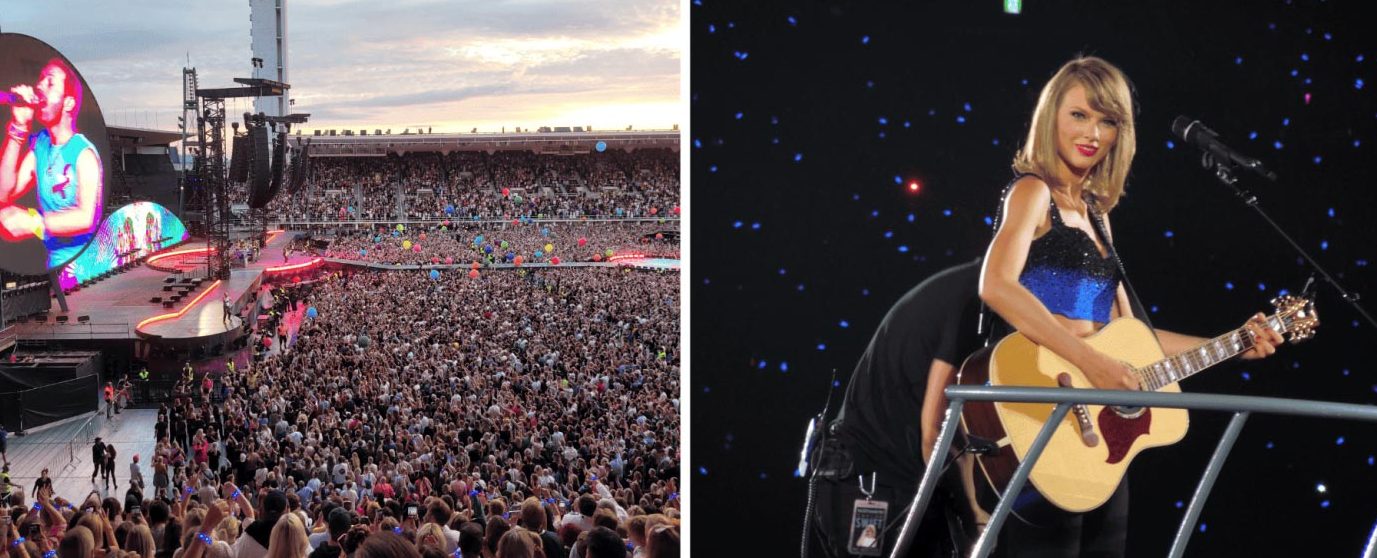
The flexibility of the stadium extends far beyond sport. Alongside cricket and football, it is envisioned as a destination for international concerts, live entertainment, cultural festivals, and large-scale community gatherings, with the capacity to host up to 50,000 attendees, keeping the precinct active and vibrant throughout the year. More than just a venue, it is envisioned as part of a larger ecosystem where sports, entertainment, retail, hospitality, and community experiences come together. 

Reference image
Reference image

The future of stadiums will not be defined solely by capacity or architecture. It will be defined by their ability to adapt, engage, and create value throughout the year. 

Read more: iismworld | sportscapemagazine 

Categories
Uncategorized

Beat the Heat: The Rise of Climate-Smart Destinations in India

As temperatures rise across India, climate comfort is emerging as a key factor in where people choose to shop, dine, and socialize.

The future of urban destinations will be defined not just by what they offer, but by how comfortably people can experience them.

Shopping trips, coffee catch-ups, weekend outings – many of us now plan them around the weather rather than our schedules. As temperatures rise, a larger question emerges: are our destinations evolving as fast as our climate?

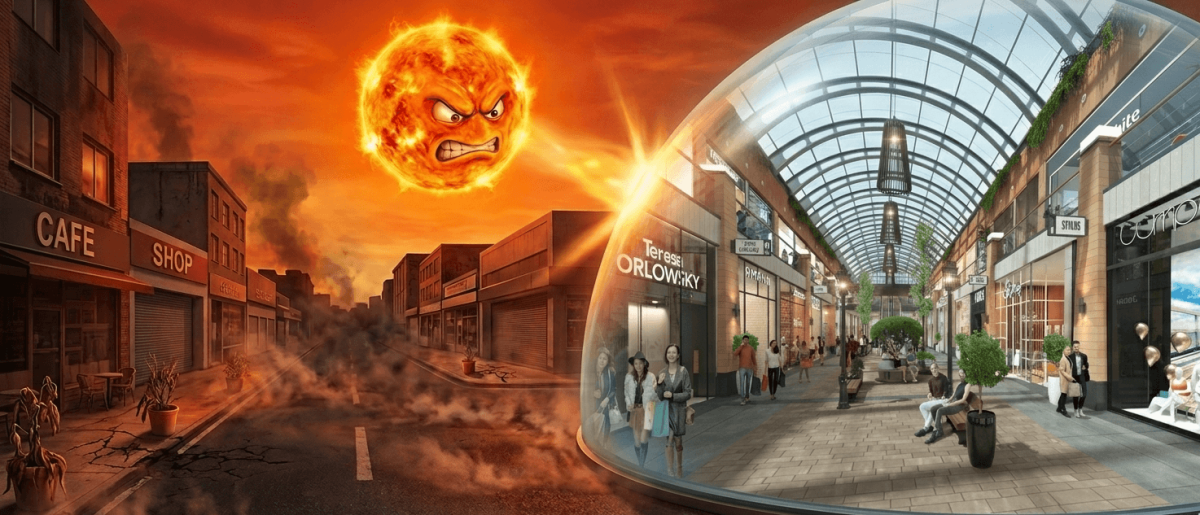
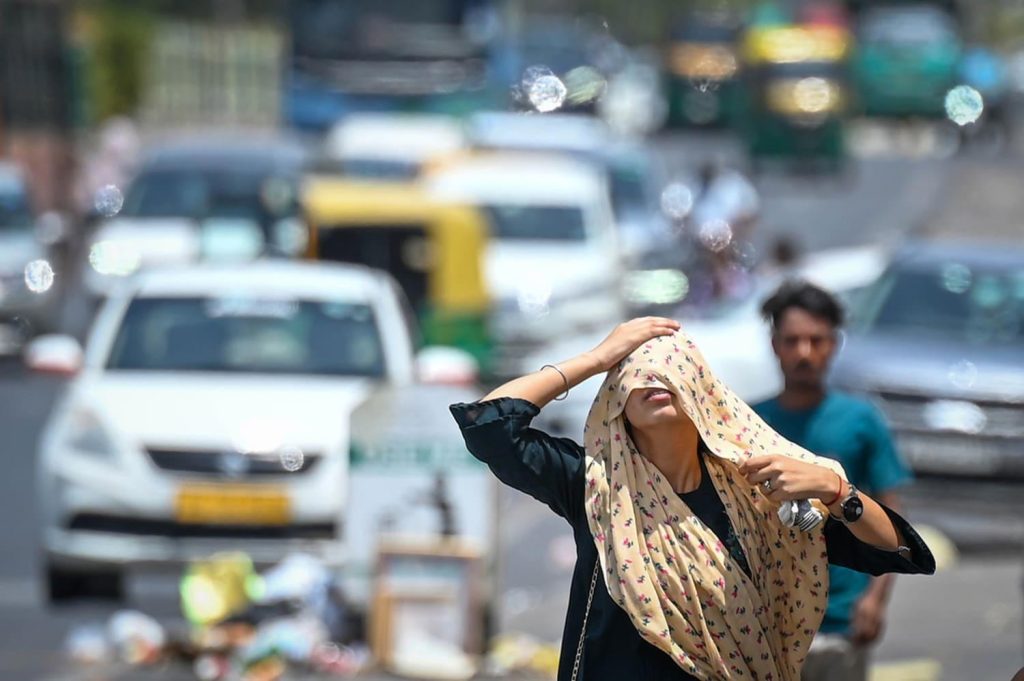
According to a study by the Centre for Science and Environment, 75.78 per cent of Delhi’s area is persistently heat-stressed (LST > 45°C for six or more years). Nearly 98.72 per cent of the city’s total area crossed the heat threshold at least once over the decade.

Extensive heat visual

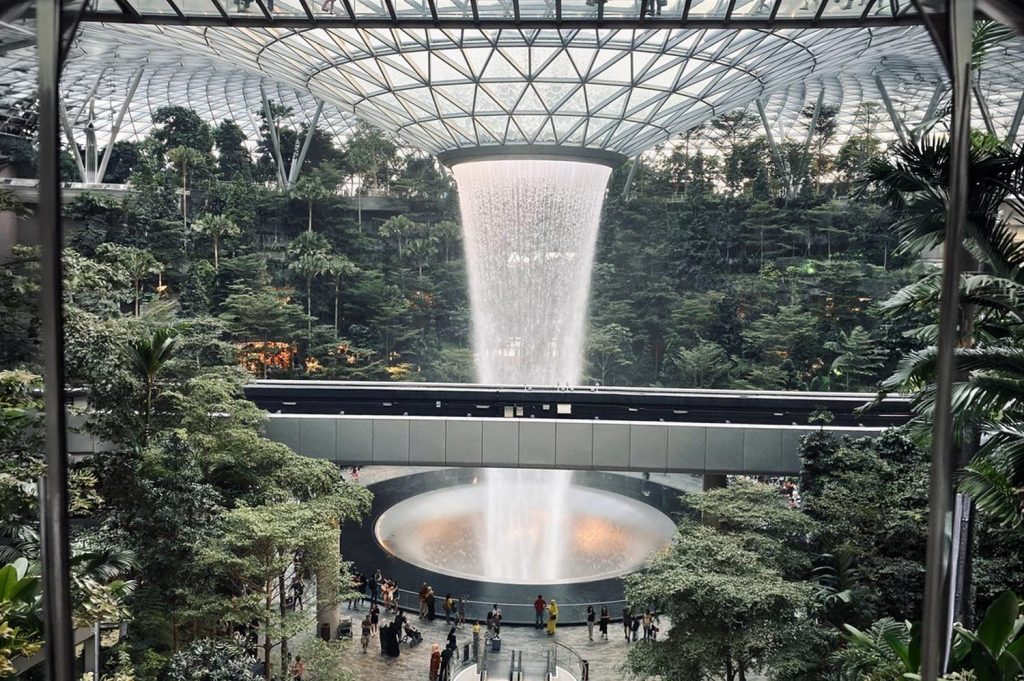
Around the world, destinations are adapting to this shift. The Helix Quarter at EmQuartier in Bangkok and Singapore’s Jewel Changi Airport climate responsive design are prime examples of climate-smart developments.

Singapore’s Jewel Changi Airport

By integrating climate-responsive design into the visitor experience, these destinations are redefining what modern urban spaces can offer.

World-class destinations are no longer just building structures – they are engineering comfort!

India’s economy is moving faster than ever but so is our climate crisis. Rising Temperatures are demanding smarter solutions.

Commercial destinations are evolving from basic shopping spaces into holistic, experience-driven community centers.

Traditional high-streets in Delhi – Hauz Khas, Sarojini Nagar Market, Janpath, etc. offer vibrancy but remain exposed to weather conditions, and enclosed malls or under-ground shopping streets provide comfort but often lack the openness and dynamics of outdoor urban spaces. Both formats come with their own limitations.

The next evolution of destination design lies in combining the openness of traditional high streets with the comfort and convenience of modern indoor environments. 

Standing at the forefront of this architectural evolution is The Omaxe State at Dwarka, New Delhi. Designed as a mixed-use ecosystem, The Omaxe State brings together shopping district, a vibrant food district, hospitality offerings, sports infrastructure, and social & leisure experiences within a single destination.

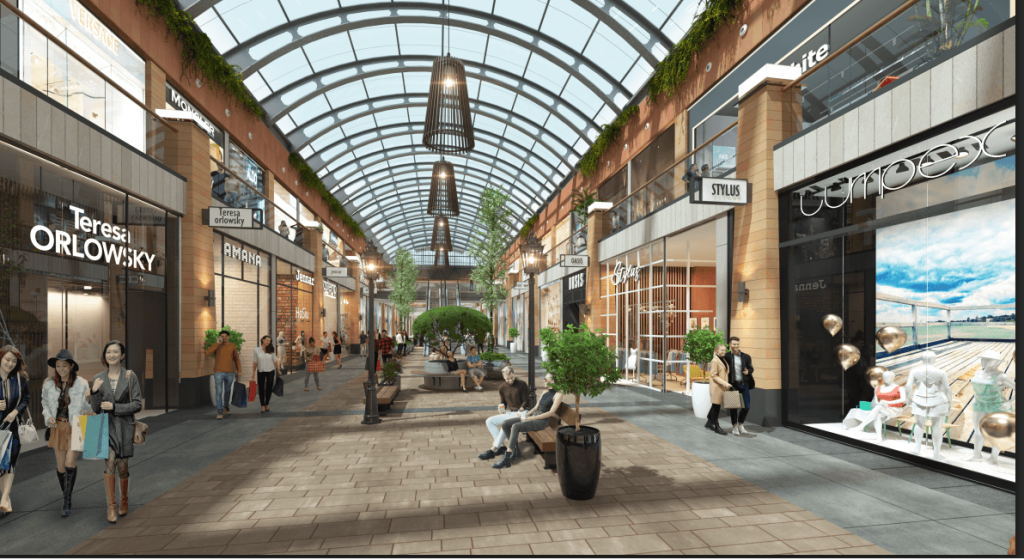
At its heart lies India’s first air-conditioned high Street. A 4.2-kilometre retail and leisure boulevard designed for premium experience making it the largest commercial space in Delhi.

 India's first air-conditioned high street
India’s first air-conditioned high street

Historically, the classic Indian high-street shopping experience meant navigating crowded pavements, dusty air, and unrelenting heat. The Omaxe State completely turns this narrative on its head by wrapping that beloved, dynamic high-street culture inside a state-of-the-art, climate-controlled corridor. 

As the country’s urban landscape continues to evolve, climate-smart destinations are likely to play an increasingly important role in shaping how people spend their time, interact with spaces, and experience cities. 

Because the future of destination development isn’t just about giving people more places to visit. 

It’s about giving them more reasons to stay.

Sources: Business Standard | Centre for Science and Environment (CSE) | Knight Frank Research | JLL 

Categories
Uncategorized

Beyond the Trophy: How Omaxe Recognised Harmanpreet’s Journey Before the World Cup Win

There are partnerships that happen after a win – and then there are partnerships that happen because someone sees the win coming long before the world does.

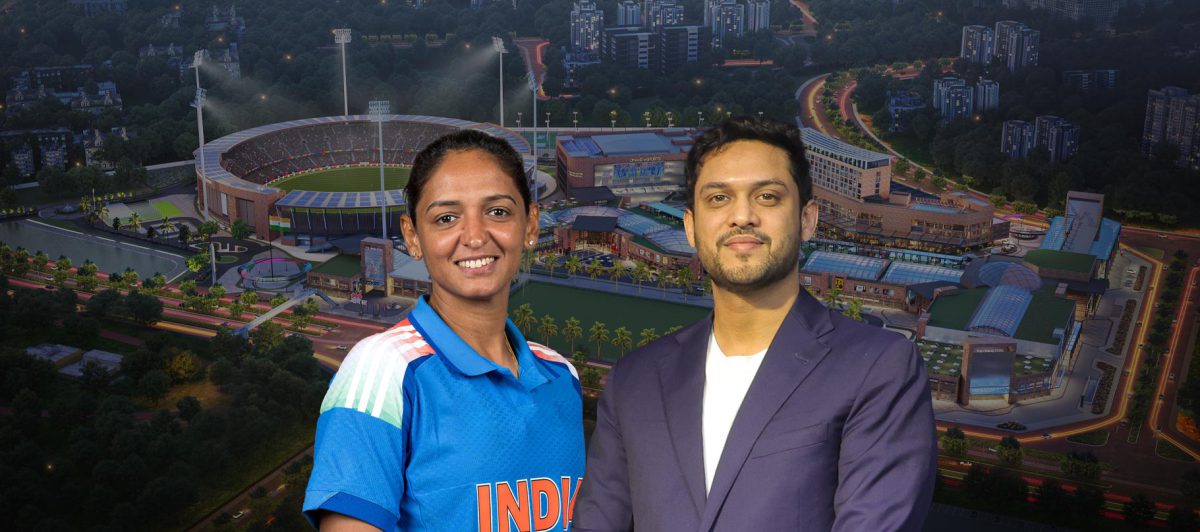
Omaxe’s association with Harmanpreet Kaur, captain of the Indian Women’s Cricket Team, belongs to the second category.

The Thinking That Started Before Anyone Was Watching

Long before the Women’s World Cup began, Omaxe had been studying leadership narratives that resonate with the brand. In today’s India, leadership isn’t just about visibility – it’s about consistency, temperament, and the ability to grow through pressure rather than around it.

Harmanpreet’s journey reflected exactly that.
Her career has never been built on sudden highs. It has grown through seasons of responsibility, moments of accountability, and years of learning to carry a team on and off the field. There is a quiet strength in that kind of journey – something that doesn’t demand attention, but steadily earns respect.

This is the kind of alignment that convinced Omaxe early on.
Not because she was likely to win a World Cup, but because her story represented direction, discipline, and purpose – values that shape how Omaxe builds communities and trusts its long-term goals.

Then the Win Happened – and the Narrative Changed Publicly

When India won its first ICC Women’s World Cup under her captaincy, the country responded with joy and pride. Naturally, when Omaxe made the partnership public soon after, many assumed it was a celebratory or opportunistic move.

But from Omaxe’s perspective, the announcement simply followed a decision that had already been made much earlier.

Sometimes timing creates its own confusion, especially when the decision-making process isn’t visible to the outside world.

Internally, the announcement wasn’t about the win – it was about acknowledging a leader whose journey had impressed the brand long before the trophy moment.

A Broader Intention: Encouraging a Culture That Sees Women Athletes as Leaders

One of the subtle motivations behind this partnership was the larger conversation around women in sport. Recognition often reaches women athletes late – usually only after medals, records or viral performances.

Omaxe wanted to play a small role in shifting that pattern.

The thinking was simple: if leadership is the benchmark, then women leaders deserve the same kind of early visibility, support and representation as anyone else. It wasn’t framed as a campaign, but as a belief that talent should not wait for validation. And if a corporate platform can help in any way – that’s meaningful.

This is where the association with Harmanpreet found its deeper grounding.

The Announcement and How It Reshaped the Conversation

The public announcement quickly became one of the most discussed stories of the week. Newsrooms across the country picked it up – from major national business dailies to regional publications across states.

Not because it was sensational, but because it represented a shift:

A major real estate brand choosing to support a woman athlete at a time when women’s sports are finding their rightful place in mainstream conversation.

Coverage came from national platforms like Hindustan Times, PTI, The Economic Times, Financial Express, Afaqs, E4M, News18, Moneycontrol, NDTV, Social Samosa, and many others.

Regional media across Kochi, Hyderabad, Pune, Surat, Ahmedabad, Bengaluru, and Chennai amplified the story further.

The cross-country interest showed that the partnership touched on something more than branding – it connected with a national sentiment that was already evolving.

What Makes This Partnership Different

Every brand-ambassador relationship has a functional side – visibility, credibility, campaign presence. But what sets this one apart is the sequence in which things happened.

  • The decision was made quietly, before the spotlight.
  • The reasoning was based on alignment, not prediction.
  • The announcement coincided with a historic moment, but wasn’t triggered by it.
  • And the intention behind it goes beyond promotion – it extends to representation and recognition.

This gives the partnership a sense of authenticity that cannot be manufactured through campaigns.

Looking Ahead – What This Means for the Brand and the Athlete

For Omaxe, this association is a reminder of the kind of leadership we want to stand with: grounded, consistent, and focused on long-term growth. For Harmanpreet, it’s an expanded platform that aligns with her way of carrying herself – understated yet impactful.

In the long run, the hope is that such partnerships help shape a culture where women athletes do not remain “exceptions to celebrate” but become part of the larger leadership narrative of the country.

In Essence

This is not the story of a brand reacting to a victory.
It is the story of a brand recognising a leader early – and the world discovering the same leader shortly after.
Two timelines moving in parallel, meeting at a moment that validated both journeys.

And sometimes, that quiet alignment creates the strongest partnerships.

The Partnership in News

https://www.news18.com/business/real-estate/harmanpreet-kaur-joins-omaxe-as-brand-ambassador-to-boost-sports-led-infra-vision-ws-l-9676864.html

https://www.exchange4media.com/industry-briefing-news/omaxe-appoints-harmanpreet-kaur-as-brand-ambassador-148985.html

https://economictimes.indiatimes.com/industry/services/property-/-cstruction/omaxe-ropes-in-cricketer-harmanpreet-kaur-as-brand-ambassador/articleshow/125052261.cms?from=mdr

https://sports.ndtv.com/women-s-odi-world-cup-2025/omaxe-ropes-in-cricketer-harmanpreet-kaur-as-brand-ambassador-9565981/amp/1

https://www.moneycontrol.com/news/business/companies/a-day-after-india-s-odi-world-cup-win-omaxe-signs-harmanpreet-kaur-as-brand-ambassador-13649773.html/amp

Categories
Uncategorized

From Residential Hub to Global Destination: How Dwarka Is Redefining Urban Growth Through Sports Infrastructure

What do London’s Stratford, Atlanta’s Battery, and Delhi’s Dwarka have in common? At their core, each has transformed from an overlooked zone into a thriving destination by weaving in world-class sports infrastructure. Once defined by transit connectivity and residential sectors alone, Dwarka is now being reimagined as a future-forward, sports-driven destination anchored by The Omaxe State.

Global Success Stories: Sports as Urban Anchors

Battery Atlanta (Truist Park)

  • Opened in 2017 on former retail land near downtown Atlanta, Battery Atlanta’s mixed‑use development anchors around Truist Park.
  • In 2024, it welcomed 8.7 million visitors, generating $130 million in retail revenues alone, demonstrating clear success beyond ticketed events
  • The $400 million development integrates retail, dining, offices, a hotel, residential, and the Roxy live venue, transforming a suburban area into a vibrant, year-round community

The Pattern: Fan Engagement = Real Estate Growth

  • Analysts at JLL note that stadium-anchored precincts like Battery, LA Live, and St. Louis’ Ballpark Village generate “significant economic revenue” by fostering activity even when no games are on.
  • The Braves organisation itself said real estate revenues rose 14% YoY to $67 million, with the precinct now contributing a stable, recurring income stream alongside sports events.

Dwarka: From Transit Hub to Destination

Strategic Location

  • Dwarka spans 56 km², housing over 1.2 million residents and connected via 8 metro stations, wide arterial roads, and proximity to the IGI Airport.
  • Traditionally seen as a residential suburb, it’s now undergoing strategic redevelopment. The newly inaugurated DDA Centre for Excellence in Sector 8, a 23-acre elite sports facility, offers boxing, wrestling, swimming, and more, serving over 200,000 users monthly.

Launching The Omaxe State: India’s Sports + Lifestyle Mecca

  • In September 2024, it was announced that Omaxe Group would invest ₹2,500 crore in a 50.4-acre PPP project in Sector 19B, expected to wrap up by 2027

Branded as The Omaxe State, it features:

  • ICC/FIFA-standard 30,000-seat cricket/football stadium;
  • 2,000-cap indoor multi‑sports arena;
  • 500,000+ sq ft of food & beverage outlets;
  • 75,000 sq ft e‑sports arena;
  • A 148‑key hotel, high-street retail, banquet venues, parking, pool & multi-court facilities for tennis, basketball, squash, and more. This “5‑in‑1” facility will be owned under a 99-year leasehold by Omaxe and operated under a Design-Build-Finance-Operate (DBFO) model, with handover to DDA after 30 years. Expected to generate over ₹4,200 crore across its lifecycle

What This Means for Dwarka and Delhi

Rewriting Urban Character

  • Dwarka’s assets—connectivity, young population, transit infrastructure—combine to create the perfect open field for a sports-led mixed-use precinct reminiscent of Stratford or Atlanta.
  • With The Omaxe State, Dwarka becomes more than a suburb—it becomes a place with destination-level significance.

Real Estate & Economic Ripple Effects

  • Battery Atlanta saw $130 million in retail revenue; Dwarka’s precinct, with size and catchment area, could unlock thousands of crores in retail leasing, hotel revenue, ticket sales, and sports programming.
  • Globally, studies show stadium-centred districts lift surrounding property values, stimulate job creation, and boost ancillary spending in hospitality, tourism, and leisure sectors

Lifestyle Upgrade

  • Residents can play, dine, shop, socialise, and relax—all within strolling distance.
  • Young professionals gain access to gyms, e-sports hubs, stadium events, F&B options; families gain parks, pools, sports academies, and community events—all without needing to leave Dwarka.

Strategic & Policy Advantages

  • This PPP marks a strong milestone in Delhi’s land-asset monetisation by DDA while retaining long-term public control.
  • Completion by 2027 aligns with India’s national push toward Fit India and hosting global sports events, providing infrastructure to bid for ICC or FIFA matches.

Bringing It All Together

ElementThe Omaxe State in DwarkaGlobal Equivalent
Scale & Investment₹2,500 crore, 50 acres – 30k-seat stadiumBattery Atlanta: $400M, Truist Park
Multi-Use IntegrationStadium + e-sports + retail + F&B + hotelBattery, Stratford, Olympic Park
Expected FootfallHundreds of thousands monthly, millions yearlyMillions in Atlanta, London precincts
Economic Impact₹4,200 crore lifecycle revenue; local uplift$130M retail in Atlanta
Completion Timeline2027 (Phase 1 by 2025 start)3‑year timelines globally

Why This Matters for You

  • Residents: Get access to quality sports facilities, events, lifestyle options, and vibrant public spaces.
  • Investors: Source long-term returns via diversified income from retail, hospitality, real estate, and events.
  • Policy Makers: Reduce infrastructure deficit, boost India’s chances to host global events, and accelerate urban regeneration.

Final Word

Dwarka is transforming from a residential hub to a destination of culture, sport, and commerce. Anchored by The Omaxe State, it is set to become India’s first sports-masterplanned district, blending world-class stadiums, lifestyle amenities, and leisure, all within a vibrant urban ecosystem. Just as Stratford and Battery Atlanta have shown globally, the right mix of sports infrastructure and real estate fuels urban renaissance, economic uplift, and quality-of-life transformation.

Categories
Uncategorized

Footfall, Returns & Real Estate Gold: Why Sports-Led Developments Are the Next Big Investment Magnet

Sport-anchored precincts like Battery Atlanta, Singapore Sports Hub, and emerging projects in London and Detroit have shown investors that mixed-use developments centred on sports venues can deliver extraordinary returns. Now, Dwarka, with The Omaxe State, is positioning itself as India’s next homegrown example of this model.

Why Sports Precincts Attract Investors

Consistent Footfall

  • Battery Atlanta hosted 8.7 million visitors in 2024. Tenants collectively earned $130 million in retail revenue that year
  • Braves Holdings reported 14% YoY growth in mixed-use revenue—reaching $67 million in 2024—and 23% growth in Q1 2025 alone (mixed-use revenue of $19M)
  • These precincts generate consistent foot traffic every day, not just during sports events.

Sustainable Revenue Streams

  • Retail, hospitality, events, parking, offices, and fast-casual restaurants combine multiple income streams.
  • Battery Atlanta pays off proportionally even during non-game days—its mixed-use component delivered $45M in adjusted EBITDA in 2024. Tax benefits too: Cobb County’s annual tax revenue jumped to $38 million by 2022, up from almost zero pre-development
  • Property Value Appreciation In 2014, The Battery’s property value was roughly $5 million; by 2022, it soared to $736 million
  • These precincts also spur spillover growth in nearby real estate, benefiting the wider local economy.

Singapore Sports Hub: A Regional Powerhouse

  • The 55,000-seat National Stadium, along with indoor arenas, aquatics, retail, and F&B venues, covers 35 hectares in Kallang. In 2023, Singapore recorded $22.4 billion in tourism receipts—up 10% YoY from Jan–Sep, with entertainment and sightseeing up 25%
  • Major concerts like Coldplay and Taylor Swift helped the Sports Hub draw over 1 million visitors in just early 2024, contributing toward an estimated S$450 million ($330M) economic injection
  • Investor Insight: When governments and private partners commit to well-designed sports precincts, they unlock tourism dollars, create thousands of jobs, and build lasting lifestyle assets.

The Omaxe State, Dwarka: India’s Emerging Capital of Footfall

Project Overview

  • A ₹2,500 crore, 50-acre PPP in Sector 19B, Dwarka—Omaxe holds a 99-year lease and aims to open by 2027.
  • Includes a 30,000-seat ICC/FIFA-standard stadium, 2,000-capacity indoor arena, 75,000 sq ft e-sports zone, movie theatre, high-street retail, 500,000+ sq ft F&B, a 148-key hotel, multi-sport courts, parking, and support facilities.
  • Expected lifetime revenue: ₹4,200 crore.

Investment Thesis

  • Footfall-driven economics: With metro, road, and airport links, daily visit numbers—even outside event days—will make this precinct a retail hotspot.
  • Diversified returns: Evaluating sports ticketing, retail rental, F&B turnover, hospitality bookings, and sponsorships together brings portfolio resilience.
  • Value uplift: Similar to global models, Dwarka’s surrounding real estate will likely see price appreciation as infrastructure and amenities improve.

What Investors Should Know

Multi-Stream Earnings

Sports precincts don’t rely on a single revenue source. Dwarka’s mix of stadium events, e-sports, cinema, shopping, hotels, and restaurants mirrors winning international models and spreads risk.

Daily Recurring Visits

With strong transport connectivity and integrated leisure options, precincts maintain vibrant footfall levels, translating into dependable retailer and investor income.

Economic & Civic Gains

Projects like Battery Atlanta funded school boards, improved infrastructure, and generated tens of millions in tax and tourism income. Dwarka’s model can replicate this, benefiting local families and government finances.

First-Mover Advantage

This will be India’s first fully integrated sports-anchored destination. Early investors and tenants can capture branding, leasing and market advantage.

Bottom Line: Why Now Is the Time

  • Global validation: Data from Atlanta, Singapore, London, and Dubai prove the asset class works.
  • Policy tailwinds: The Indian government’s “Fit India” and urban transformation initiatives support such projects.
  • Dwarka’s readiness: Transit, population, and civic support offer the perfect launchpad.
  • Revenue diversity: Sports, events, hospitality, retail, e-sports, sponsorship—this model brings robust upside even during economic slowdowns.

Why should you invest in Dwarka?

If you’re evaluating real estate with high-yield and long-term stability, sports-led mixed-use precincts, now emerging in Dwarka, offer a compelling value proposition. This is the moment India catches up to global benchmarks.